Is It Rude to Sell Someone Elses Art if You Dont Want It?
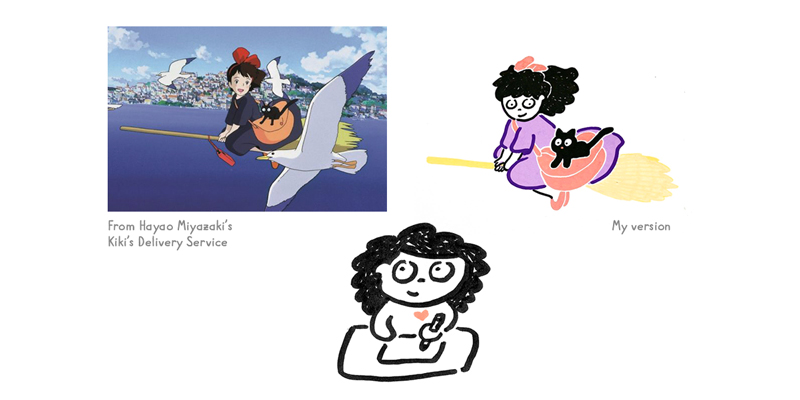
Accept yous ever copied another artist's artwork? Do you feel bad because you notice it difficult to draw without copying another artist'southward work? Many new artists think about copying in one of two means:
- Copying is a shameful act—something to exist hidden.
- Copying is an unethical act—something to be avoided.
But yous guys, there's nothing wrong with copying, as long equally you follow some best practices. And in fact at that place are many reasons you should copy. Almost every artist's journeying begins with imitating other artists. Over time, the experience leads them to explore and detect their own style and phonation.
There are iv basic intentions that atomic number 82 people to re-create other artists. Allow's have a look!
Copy to Imitate + Learn
"Imitation is not only the sincerest form of flattery—it'south the sincerest form of learning." –George Bernard Shaw, playwright
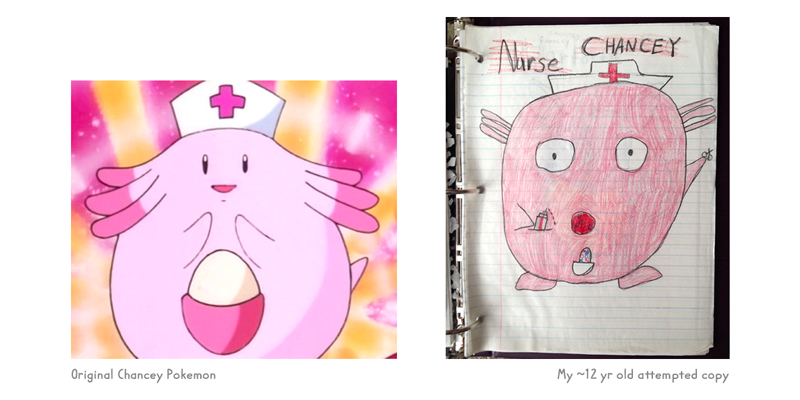
Information technology is extremely mutual for people new to cartoon to re-create other pieces of art. It's one of those things everyone does, simply no one talks virtually, and so everyone thinks they're the but one. I did it myself for years and I'm willing to bet you did likewise!
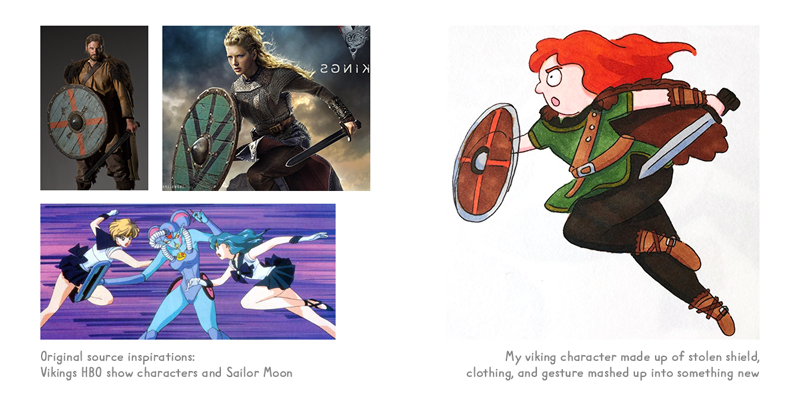
I spent a huge portion of my childhood copying page afterward page of Pokemon and Sailor Moon. I was trying to copy every shape, line, and color as closely to the original as I could—I was literally copying them. Not tracing, which teaches you nothing, but copying, which tin teach you a great deal.
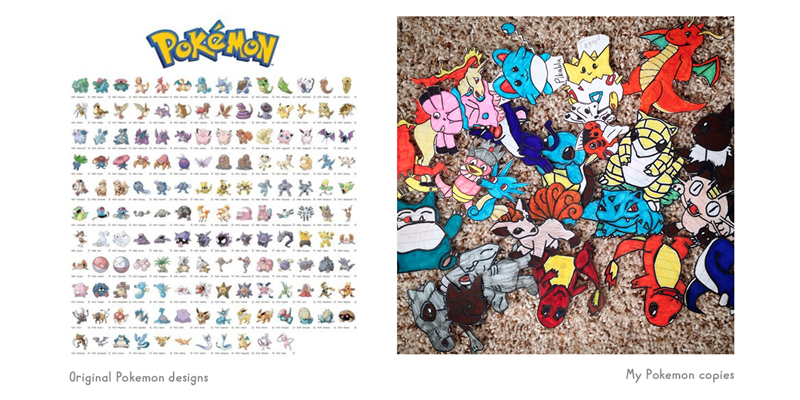
I copied because I wanted to acquire how the animators drew all these characters I loved. I wanted to larn how to draw from a mechanical point of view: how do I motion my pencil on the folio to become my lines to look like those? It was only by copying again and once more, over and over, that I was able to train my paw to move in a way I could control.
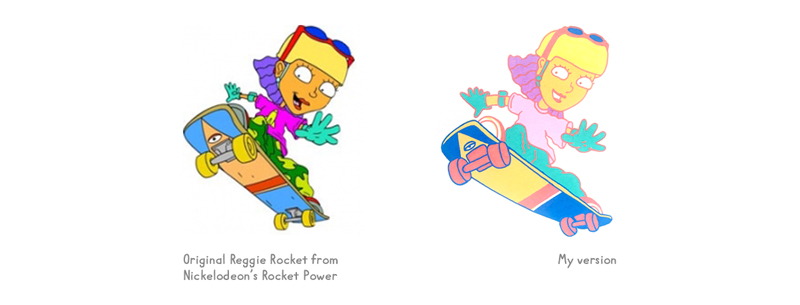
My Copy to Learn phase primarily happened in the 90's, earlier social media or blogging exploded, so these drawings were stuffed inside a iii-ring binder and mostly kept to myself. Now, in the era of the internet and social media, things are a flake more sticky with what to do with these drawings. See the cease of this essay for all-time practices in sharing copied art.
Copy to Steal + Combine
"If you think a man draws the blazon of easily that you desire to draw, steal 'em. Take those hands." –Jack Kirby, comic book creative person
But cartoon isn't just mechanical movements across a page. In that location are other deeper things going on when we depict. Attempting to draw accurate copies of other artworks is great for educational activity united states the rules and principles of art. But at some point, to make your ain original art, yous accept to cull which rules you want to follow and which yous desire to chuck out the window.
After a while, I became bored of copying Pokemon and thought it would be cool to make upward my own Pokemon creatures. And that's when my intention of copying shifted to the next stage. As I started drawing my own Pokemon creatures, I was still copying in many means, but my intention was no longer to imitate and larn. My new intention was to steal and combine.
I lifted pieces of different Pokemon—eyes from Jigglypuff, legs from Bulbasaur, tail from my pet cat, Elvis—and mashed them upwardly together to create a brand new Pokemon—my own Pokemon. Little did I know, I was on my manner to making my get-go pieces of art.
"Information technology'southward not where yous take things from—it's where you take them to." –Jean-Luc Godard, film director
If you copy something line for line, aiming for an exact replica, you haven't made fine art. You've just fabricated a copy of someone else'southward art. But if you have niggling $.25 and pieces from many different sources and change and combine them in new means, y'all've now created something new and original—you've created art.
Copying with the intention to steal begins with a spark of inspiration. I loved and was inspired past the creative elements of Pokemon, and my intention was to create something new from that inspiration. That's what art is: taking an idea, combining it with other ideas in your head, and making a new idea.
It's incommunicable to not be influenced past the things around united states of america—information technology's the very essence of creativity. Everything nosotros create is a mashup of everything we've seen, heard, felt, and experienced. All these things together, from Pokemon to Sailor Moon to my pet cat, make up my creative influences. And new influences are constantly absorbed into us becoming part of our ever-evolving artistic vox.
If I had never seen Pokemon, I would draw today in a completely dissimilar mode. If I had never read Michael Pollan'southward Omnivore's Dilemna, I never would take been inspired to create Nosotros Are Fungi. These influences, inspirations, and the act of copying to steal and combine are essential parts of the creative process. Ideas create ideas. Art creates fine art.
"Nothing is original. Steal from anywhere that resonates with inspiration or fuels your imagination. Devour old films, new films, music, books, paintings, photographs, poems, dreams, random conversations, architecture, bridges, street signs, copse, clouds, bodies of water, light and shadows. Select only things to steal from that speak directly to your soul. If you do this, your piece of work (and theft) will be accurate." –Jim Jarmusch, moving-picture show director + screenwriter
Copy to Honour + Play
"Those who exercise not want to imitate anything, produce nothing." –Salvador Dali, painter
We artists often feel pressure to sit down and describe something completely original every time they describe. But making original art takes a certain mindset, inspiration, and free energy level, and permit's be honest: sometimes it'south but not at that place. So if nosotros're aiming to depict consistently (which you are, aren't you?), we need a mode to draw when nosotros don't take any idea of what the heck to draw.
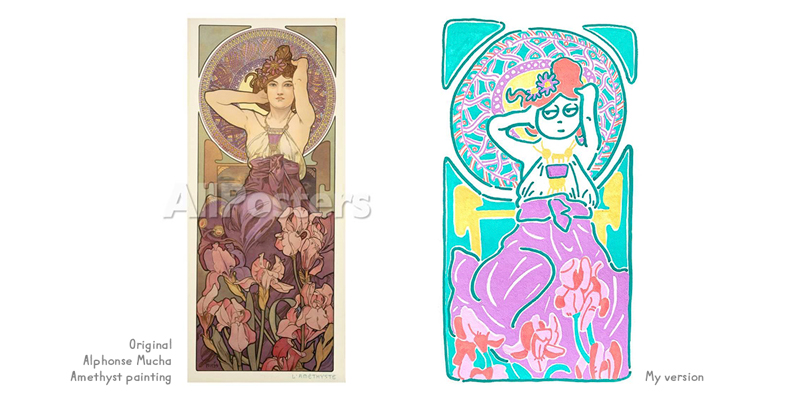
One of my favorite methods of drawing when I'm depression on creativity is to copy some of my influences. My intention here is to honor something I love and lift the pressure of cartoon something new—basically, to play on the page.
Information technology'south a flake dissimilar than copying to learn, where I'k aiming for imitation and a direct re-create. And information technology's a bit different than copying to steal and combine, where I'1000 aiming to take bits and pieces from multiple different sources, combining them into something new. Copying to play is more light-hearted. There'southward simply one source of influence, but my artistic mode is injected in the cartoon too.
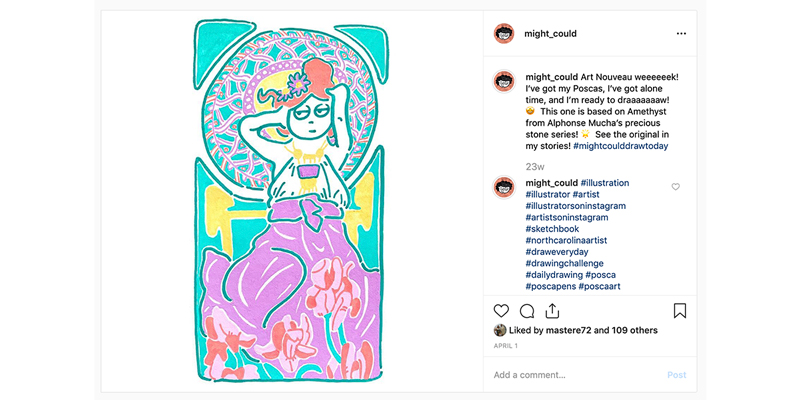
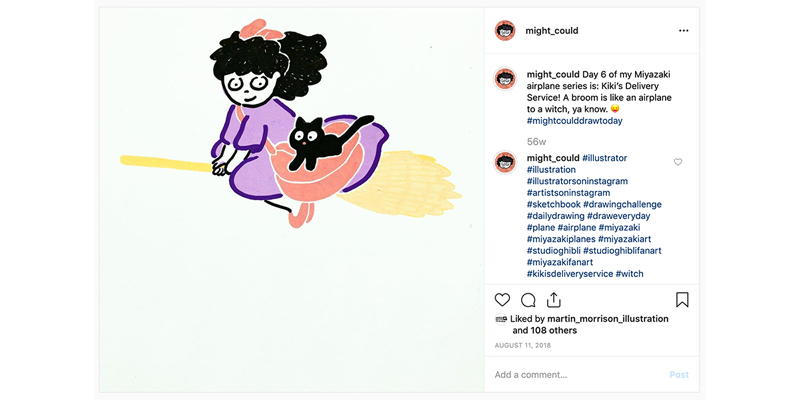
This is similar to the popular hashtag, #DrawThisInYourStyle on Instagram. Artists offering up a slice of their art for other artist's to re-create in their own way, irresolute the linework, colors, and overall fashion, while crediting the original artist and artwork. In this method, the artists are not copying the piece closely enough to exist learning, and they're not diffusive enough from it or stealing enough from other sources for information technology to be combining. It's right in between: it's playing. It's a fun way to draw, when y'all just want to describe.
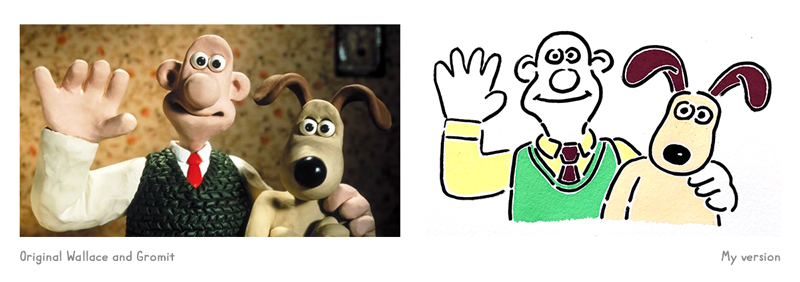
I'g actually feeling low on creative energy right now (helloooo month eight of pregnancy!), and so I made this week's #MightCouldDrawToday theme Wallace and Gromit, the British claymation series, with this intention in listen. Throughout the calendar week, we'll be looking at these claymation characters and drawing our own versions of them in our own styles. My intention is to share this influence I love, and give myself (and you guys!) a creative outlet that'south easy to arroyo in a low free energy mood.
And so far all these methods of copying have been skilful—they're benign and help us abound as artists in many different ways. But what happens if we move beyond the intentions of learning, stealing and playing? Tin can copying be bad?
Re-create to Plagiarize
"Copying opens your optics to new possibilities, and new techniques… but trying to fob it off as your own is quite another matter." –Louise Bunn, sculptor + painter
Let me exist crystal clear: Plagiarism is incorrect. Co-ordinate to the Merriam Webster Lexicon to plagiarize is "to steal and laissez passer off (the ideas or words of another) as ane'south own; to use (another'south production) without crediting the source."
Y'all may be thinking: so you're saying copying, stealing, and playing are good, just plagiarizing is bad? What's the difference? How do we know where the line is?
It ever comes back to intention. Nosotros've talked about copying with the intention to learn, to create something new, and to honor and play. But sometimes, a person copies with the intention of taking advantage of another artist. Or the intention of skipping the hard piece of work of creating their own original art and passing someone else's art every bit their own. Or the intention to profit off someone else'south art.
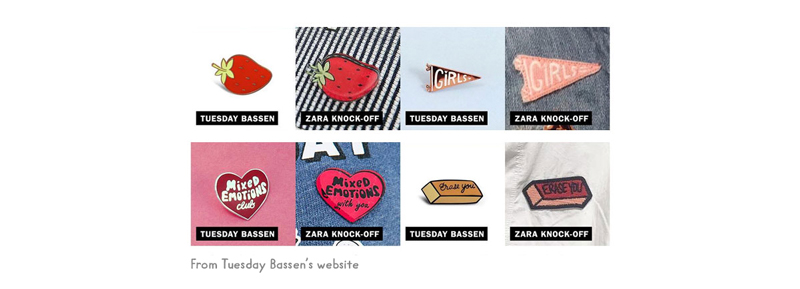
There are then many horror stories out in that location of artists getting their work plagiarized. Sometimes it's a random person on the internet passing off someone else's piece of work every bit their ain. Sometimes it's a huge corporation selling blatant copies of an artist's work without crediting or paying them, similar Tuesday Bassen and Zara in the image above.
Either way plagiarism is unethical, and no good comes from it. It's hurtful to the plagiarized artist, directly affecting their careers and income, and it's unhelpful to the plagiarizing person because they're merely short-irresolute themselves of true creativity and not creating art authentic to themselves.
Influences are meant to create inspiration, not dishonest imitations. I believe copying is an essential function of learning to depict, but you Accept to be honest with yourself and others almost what you lot're doing. If you copy a piece of art and share information technology online, you need to credit the original influence.
If you're dislocated or unsure nearly your intention, hither's an easy gut cheque when you're because sharing your piece of work: Practice yous feel the need to hide who or what influenced your drawing? If you're not willing to share your sources, so y'all're probably not drawing with an intention of learning, creating something new, or playing, and this may be a piece of artwork you should keep to yourself. Individual artworks tin exist a source of learning also, and nosotros don't have to share everything we brand. Copying just becomes plagiarizing if you effort to pass it off someone else'south work as your own.
Best Practices of Copying
I think this may be why people are scared to admit to or talk virtually copying. But as long as you're honest with yourself and others, copying tin can be a successful part of any creative person's evolution. Here are a few best practices to keep in mind when y'all're copying, and especially when you lot're thinking of sharing artwork spurred from copying:
Learning/Imitating + Honoring/Playing
If you copy a piece of art with the intention of learning or playing and desire to share it online: credit the original source. Let people know you are copying, what you're copying, and if not a well-known franchise similar Pokemon, who you are copying. Be honest.
Stealing/Combining
If you copy a piece of fine art with the intention of stealing and want to share it online, consider: did you lot steal from plenty sources and change the original ideas enough to create something new? If aye, awesome, you made some original art! Share away!
If yous only had one influence, or wouldn't want to show people your source influences because your version is as well close to the original, or if you're not certain: you should credit the original source/influence/artist.
Plagiarizing
If you copy a slice of art with the intention of claiming someone else'due south art every bit your own or profiting off another creative person's work: DON'T.
All You Need to Know
Copying is a office of well-nigh every artist's evolution. Copying another artist'south work tin be a wonderful style to learn, get inspired, get ideas, honor an influence you love, and create something new. All fine art is a mash up of ideas, and nosotros can all influence and inspire each other, so long as we are creating and sharing from a place of honesty and transparency.
So learn away, play away, steal away, re-create, copy, re-create, and don't forget to credit your influences!
I started noticing something [all my favorite artists] had in common—they all copied each other… I realized that this is what artists are supposed to do—communicate back and forth with each other over the generations, have old ideas and brand them new (since information technology'southward impossible to really "imitate" somebody without adding anything of your own), create a rich, shared cultural language that was available to everybody. One time I saw it in folk fine art, I saw information technology everywhere – in hip-hop, in street fine art, in dada. I became convinced that the soul of civilisation lay in this kind of weird, irreverent-but-reverent backs-and-along." –Will Sheff, vocalist
Cheers for reading!
<3,
Christine
Source: https://might-could.com/essays/inspiration-vs-imitation-how-to-copy-as-an-artist/
0 Response to "Is It Rude to Sell Someone Elses Art if You Dont Want It?"
إرسال تعليق